


Yes, companies save significant money with remote employees. Research shows businesses can save over $10,000 per employee annually through reduced office costs, lower turnover, and decreased absenteeism. The savings come from multiple areas: smaller real estate footprints, fewer overhead expenses, and higher retention rates that cut recruiting costs.
Remote work has moved from pandemic necessity to strategic business decision. Smart leaders now see it as a financial lever. The numbers back this up. But the savings go deeper than most realize. They touch everything from productivity gains to talent acquisition costs.
How Much Can Companies Actually Save Per Remote Employee?
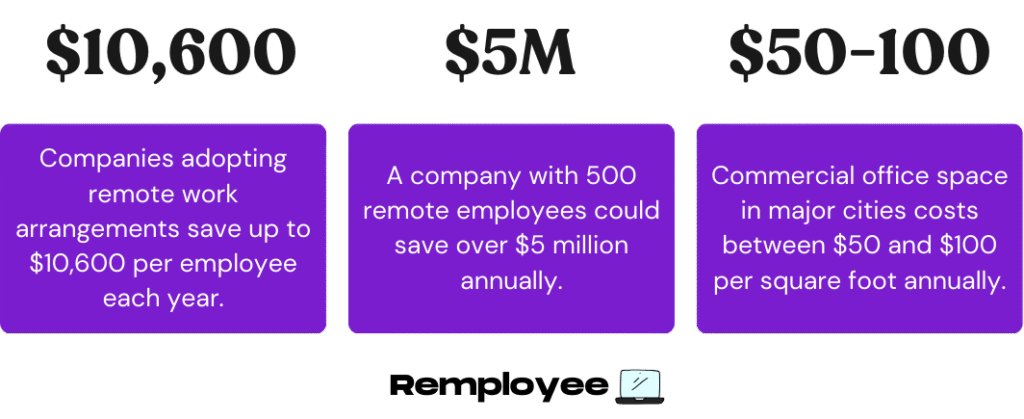
The direct savings are substantial and measurable. Companies adopting remote work arrangements can save up to $10,600 per employee each year. This figure comes from eliminating or reducing traditional office expenses that most businesses accept as fixed costs.
The breakdown looks like this:
- Office space reduction: Rent, maintenance, and property costs shrink dramatically
- Utility savings: Electricity, heating, cooling, and water bills drop
- Office supplies and equipment: Furniture, computers, and daily supplies decrease
- Cleaning and security services: Building maintenance costs fall
- Food and beverage expenses: Cafeteria subsidies and coffee supplies disappear
Large enterprises see these numbers multiply quickly. A company with 500 remote employees could save over $5 million annually. That money flows straight to the bottom line or gets reinvested in growth initiatives.
Real estate represents the biggest chunk. Commercial office space in major cities costs between $50 and $100 per square foot annually. Each employee typically needs 30-60 square feet. The math gets expensive fast. Remote work lets companies downsize dramatically or eliminate office space entirely.
Does Remote Work Really Boost Productivity and Output?
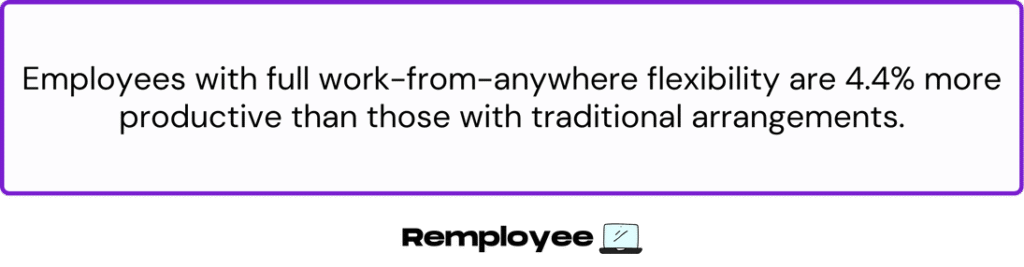
Productivity gains translate directly into financial returns. Research from Harvard Business School found that employees with full work-from-anywhere flexibility were 4.4% more productive than those with traditional arrangements. That study examined patent examiners at the US Patent and Trademark Office, providing hard data on output.
The productivity improvements come from several sources:
- Fewer interruptions: No impromptu meetings or desk drop-bys
- Eliminated commute fatigue: Workers start fresh instead of stressed
- Personalized work environments: People optimize their own spaces
- Flexible peak hours: Employees work when they perform best
- Reduced office politics: Less time navigating workplace dynamics
Additional research supports these findings. A study of over 30,000 participants showed remote workers outperformed their in-office counterparts. And 77% of remote workers report completing the same tasks in less time or getting more done in the same hours.
The financial impact compounds. Higher productivity means more output without additional headcount. Projects finish faster. Customer response times improve. Revenue per employee increases. These gains often exceed the direct cost savings from reduced office expenses.
How Does Remote Work Reduce Employee Turnover Costs?

Turnover devastates budgets. Replacing an employee costs 50-200% of their annual salary when you factor in recruiting, training, and lost productivity during the transition. Remote work slashes these expenses by keeping employees happier and more committed.
The retention data tells a clear story. Remote companies have a 25% lower turnover rate compared to traditional office-based organizations. Working remotely can boost employee satisfaction by up to 20%. And 60% of workers would leave their current job for a fully remote position.
The math matters here. Say your average employee earns $70,000 annually. Replacement costs range from $35,000 to $140,000 per departure. If you have 100 employees and reduce turnover from 20% to 15%, you prevent five departures. That saves $175,000 to $700,000 per year—just from retention improvements.
Remote work addresses core employee needs:
- Work-life balance: People manage personal responsibilities better
- Geographic freedom: No forced relocations or long commutes
- Autonomy and trust: Adults appreciate being treated like adults
- Reduced burnout: Flexible schedules prevent exhaustion
- Family time: Parents especially value the flexibility
These factors create loyalty that traditional perks cannot match. Employees remember who trusted them during major life transitions. They stay longer and refer talented friends.
What Hidden Cost Savings Do Most Companies Overlook?
Beyond the obvious expenses, remote work eliminates costs that rarely appear in budget discussions. These hidden savings add up substantially over time.
Relocation expenses disappear. Companies traditionally spend $20,000 to $100,000 relocating new hires. Remote hiring eliminates this entirely. You can recruit the best person regardless of their current location.
Business travel decreases. Teams that work remotely develop comfort with virtual collaboration. They need fewer in-person meetings, reducing flights, hotels, and meal expenses.
Absenteeism drops significantly. Half of employers believe remote work reduces nonattendance, and half of remote workers report taking fewer sick days. People with minor illnesses work from bed instead of calling out completely.
Insurance costs may decline. Fewer people in office buildings means lower liability exposure. Workers’ compensation claims often decrease. Some insurers offer discounts for remote-first companies.
Parking and commuter benefits shrink. Companies that subsidize parking or transit passes save when employees stay home.
Technology investments shift productively. Money that previously went to office infrastructure now funds collaboration tools that provide lasting value.

One often-missed benefit: geographic salary arbitrage. Companies can hire excellent talent in lower-cost markets while maintaining competitive compensation. An engineer in Austin might accept $120,000 happily—the same role in San Francisco costs $180,000. The employee enjoys a higher standard of living, and the company saves $60,000 annually.
Which Types of Work Generate the Biggest Remote Savings?
Remote work delivers maximum financial benefits for certain job types. Understanding this helps companies prioritize their transition strategies.
Research identifies “pooled interdependence” work as ideal for remote arrangements. These roles require little daily coordination with colleagues. Workers follow established processes independently. Patent examiners, mentioned in the Harvard study, fit this profile perfectly.
High-return remote roles include:
- Software developers and engineers: Code reviews happen asynchronously
- Writers, editors, and content creators: Creative work benefits from focused solitude
- Financial analysts and accountants: Number-crunching needs concentration
- Customer support representatives: Tickets get resolved from anywhere
- Graphic designers: Visual work requires uninterrupted creative time
- Data scientists: Analysis improves with deep focus periods
Roles requiring constant real-time collaboration see smaller savings. Creative brainstorming sessions, complex negotiations, and hands-on training sometimes justify office expenses. The key is matching work style to work location.
Companies often discover that roles they assumed needed office presence actually thrive remotely. Testing assumptions with pilot programs reveals surprising flexibility in many positions.
How Should Companies Implement Remote Work for Maximum Savings?
Smart implementation maximizes financial returns. Rushing the transition wastes potential savings and creates problems that cost money to fix.
Start with a gradual transition. The US Patent and Trademark Office required in-office experience before allowing full remote work. Employees needed two years working alongside colleagues before gaining location flexibility. This foundation-building period reduced mistakes and support costs later.
Invest in proper technology. Collaboration tools, secure access systems, and communication platforms require upfront spending. But they enable the savings that follow. Skimping here costs more through lost productivity and security breaches.
Establish clear expectations. Define deliverables, communication norms, and availability requirements. Ambiguity creates friction that wastes management time and employee energy.
Train managers for remote leadership. Supervising distributed teams requires different skills than managing visible employees. Untrained managers resort to micromanagement, damaging morale and productivity.
Create measurement systems. Track the metrics that matter: output quality, response times, project completion rates, and employee satisfaction. Data prevents arguments about remote work effectiveness.
Maintain some connection opportunities. Periodic gatherings, virtual team events, and optional co-working stipends build relationships that make collaboration smoother. The investment prevents isolation problems that hurt retention.
Document everything. Remote teams need written processes, recorded decisions, and searchable archives. This documentation investment pays dividends through reduced confusion and faster onboarding.
The most successful transitions happen in phases. Start with willing volunteers. Measure results carefully. Expand based on evidence. This approach builds organizational confidence while identifying and solving problems early.
What Does the Future Look Like for Remote Work Economics?
The financial case for remote work strengthens each year. Younger workers expect flexibility as a baseline benefit. Gen Z workers are twice as likely to prefer remote work compared to Baby Boomers. As older employees retire, remote-friendly companies will attract the best replacement talent without paying premium salaries.
Technology continues improving. Video calls feel more natural. Collaboration tools get smarter. Virtual reality may eventually make remote meetings feel nearly identical to in-person gatherings. Each advancement reduces the collaboration friction that currently limits some remote roles.
Remote work has evolved from emergency response to strategic imperative. The financial benefits are clear, measurable, and substantial. Companies that embrace this shift position themselves for long-term success. Those that resist pay the price in higher costs and reduced competitiveness.

Ben doesn’t buy into “the way it’s always been done.” He’s spent his career challenging hiring norms and rethinking how remote work should feel. At Remployee, he helps create honest tools and opportunities for people tired of the gig economy’s empty promises.